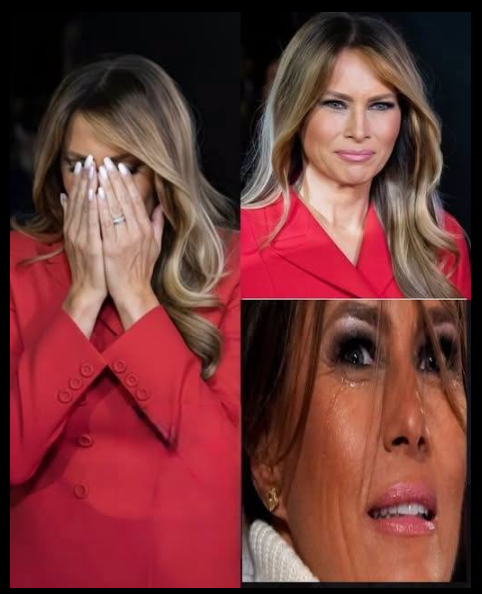
The world has long been accustomed to the flashing bulbs and deafening roar of the political arena, a place where the Trump family has stood at the epicenter for a decade. Yet, what has emerged around Melania Trump in these recent, harrowing weeks is something entirely different from the usual partisan spectacle. It is something quieter, deeper, and profoundly human. Across the globe, a digital and spiritual vigil has begun to take shape, transcending the typical boundaries of political affiliation and social status. As news trickles out regarding the difficult times the former First Lady is navigating, the atmosphere has shifted from one of loud debate to one of somber reflection.
For years, the public gaze has been fixed on the polished exterior of the Trump family, often dissecting every gesture and every word with a surgical, and sometimes merciless, precision. But even the most hardened critics have found themselves pausing in recent days. There is a universal recognition dawning that beneath the designer labels and the historic titles lies a mother, a wife, and a woman carrying a private weight that would buckle the strongest of shoulders. This realization has created a rare moment of stillness in a world that is usually characterized by constant noise. Empathy, a quality often in short supply in the modern discourse, has quietly but firmly stepped forward to replace the usual arguments.
The gravity of the current situation has prompted an outpouring of thoughts and prayers that spans continents. From small towns to bustling metropolises, people are taking a moment to acknowledge the strain of a family enduring a private struggle under the unrelenting heat of a global spotlight. It is a unique kind of pressure—one where the most personal moments of grief, worry, or transition are treated as public property. In this tension, a collective consciousness is forming that prioritizes the human heart over the political headline. The messages flooding social media and community boards are not just words of support; they are an acknowledgment of our shared vulnerability.