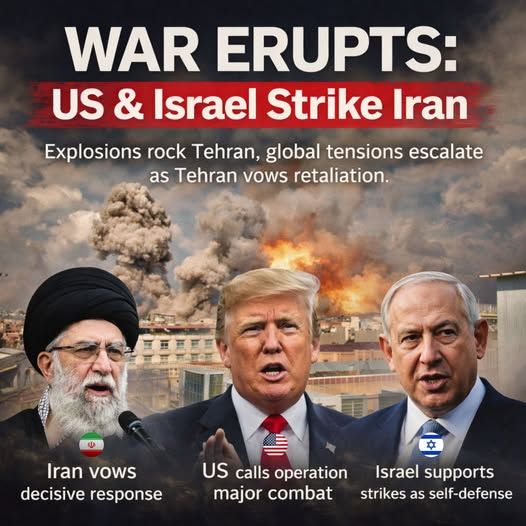
Reports of coordinated military strikes inside Iran attributed to the United States and Israel have triggered significant concern across the Middle East and beyond. According to early information circulating from regional sources, dozens of individuals have been killed and many more injured. However, as with any fast-moving international crisis, the full scope of the situation remains subject to confirmation and further investigation.
This article provides a comprehensive and balanced overview of the reported events, the humanitarian implications, the political reactions from key stakeholders, and the broader geopolitical context. As developments continue to unfold, verified information and careful analysis remain essential for understanding both the immediate and long-term consequences.
Early Reports and Casualty Figures
Initial accounts from local sources within Iran indicate that at least 40 people may have lost their lives during a series of coordinated strikes. Dozens more were reported injured, with varying degrees of severity. Officials in affected areas are continuing to assess the damage and confirm casualty figures, and numbers may change as additional information becomes available.
Among the locations reportedly impacted was a girls’ school in southern Iran, where local media described significant casualties involving both students and staff. These reports have intensified humanitarian concerns and prompted calls for independent verification. At this stage, comprehensive confirmation from international observers remains limited due to communication disruptions in some affected regions.
Emergency responders were deployed shortly after the strikes. Rescue teams, medical personnel, and local authorities began evacuating survivors and securing damaged sites. Given the scale of reported destruction, authorities have acknowledged that determining the full extent of casualties and structural damage may take time.
Damage to Infrastructure and Urban Areas
Smoke and fires were reportedly visible across multiple cities in the aftermath of the strikes. Explosions were said to have occurred near strategic sites, including bridges, energy facilities, and military-related installations. Satellite imagery released by various monitoring organizations appears to show structural damage consistent with high-intensity strikes, though official technical assessments are still ongoing.
Hospitals in some areas have reportedly experienced a surge in patients. Medical staff have been working under significant pressure to manage the influx of injured civilians. In addition to physical injuries, there are concerns about psychological trauma among affected communities.
In certain regions, disruptions to electricity, water supply, and communication networks have complicated relief efforts. Damaged cellular towers and internet infrastructure have made it challenging for journalists and humanitarian organizations to independently verify details. This information gap underscores the difficulty of reporting accurately during active conflict situations.
Statements from Washington and Jerusalem
At the time of reporting, detailed operational statements from officials in United States and Israel have been limited. Public comments have generally emphasized security concerns and strategic objectives, though specific targets and tactical details have not been fully disclosed.
According to various intelligence and defense analysts, the strikes were reportedly aimed at military-related assets, including missile production facilities, command centers, and storage depots. These assessments suggest that the operation may have been intended to degrade specific capabilities rather than target civilian infrastructure.
Analysts note that military operations in highly sensitive geopolitical environments often serve dual purposes: tactical disruption and strategic signaling. If confirmed, the reported strikes may reflect broader efforts to deter perceived threats and influence regional power dynamics.
Iran’s Response and Domestic Reaction
Iranian authorities have strongly condemned the reported strikes, describing them as a violation of national sovereignty. Senior officials have stated that the country reserves the right to respond under international law. State-affiliated media outlets have broadcast images of damaged buildings and public gatherings expressing solidarity and protest.
Public demonstrations have been reported in several cities. While gatherings appear to reflect anger and concern among segments of the population, authorities have also deployed security forces to maintain public order and prevent unrest.
The possibility of retaliation has raised concerns among international observers. Any countermeasure could risk further escalation, especially given existing regional tensions.
Regional Security Concerns
Neighboring countries in the Middle East are closely monitoring developments. Heightened security alerts have been reported across the region, with governments assessing potential spillover effects. Intelligence-sharing and diplomatic communication channels appear to be active as regional leaders attempt to prevent broader instability.
The Middle East has long been characterized by complex alliances, proxy conflicts, and strategic rivalries. A direct confrontation involving major actors such as the United States, Israel, and Iran represents a significant development in this landscape.
Security analysts warn that even limited exchanges can have far-reaching implications. Critical shipping routes in the Persian Gulf, a vital artery for global energy markets, could become vulnerable if tensions escalate. Disruptions in this region would likely affect international trade, energy prices, and economic stability worldwide.
The Role of the International Community
Global powers and international institutions are urging restraint. Diplomats from European nations, as well as representatives of the United Nations, have reportedly engaged in behind-the-scenes discussions aimed at de-escalation.
The United Nations has historically played a role in facilitating dialogue during regional crises. Calls for calm have emphasized the importance of preventing further civilian harm and maintaining channels for diplomatic negotiation.
International humanitarian organizations are preparing contingency plans in case the conflict expands. Emergency relief supplies, medical teams, and logistical support may be mobilized if the humanitarian situation deteriorates.
Humanitarian Implications
Beyond strategic considerations, the human cost of the reported strikes remains a central concern. Civilians in affected areas face multiple challenges:
- Loss of housing due to structural damage
- Limited access to healthcare amid hospital overcrowding
- Disruptions to essential services such as water and electricity
- Psychological stress caused by sudden violence
In communities already coping with economic pressures, additional instability can have long-lasting effects. Children and elderly individuals are particularly vulnerable in such environments.
Humanitarian experts emphasize the importance of safeguarding civilian infrastructure and ensuring that emergency aid can reach those in need without obstruction. The protection of non-combatants is a cornerstone of international humanitarian law.
Historical Context of Tensions
Relations between the United States, Israel, and Iran have been strained for decades. Past confrontations have included cyber operations, sanctions, intelligence activity, and proxy conflicts in neighboring countries.
However, large-scale, direct strikes inside Iranian territory—if confirmed—would represent a more visible escalation. Analysts suggest that such actions may reflect a shift toward overt engagement rather than indirect pressure.
Understanding the broader context is essential. Longstanding disagreements over regional influence, missile development, and security alliances have shaped the strategic environment. These underlying factors continue to influence policy decisions and military planning.
Information Challenges in Fast-Moving Conflicts
Accurate reporting during active crises can be difficult. Communication outages, restricted access to affected sites, and conflicting narratives from different governments complicate verification efforts.
Journalists and independent observers often rely on a combination of eyewitness accounts, official statements, satellite imagery, and third-party analysis. As new data emerges, casualty figures and damage assessments may be revised.
For readers and viewers, maintaining a cautious approach to early reports is advisable. Verified information from multiple credible sources provides the clearest understanding of events.
Potential Economic Impact
Beyond immediate security concerns, financial markets are closely watching the situation. The Middle East plays a crucial role in global energy supply chains. Any perceived risk to shipping routes or production facilities can influence oil prices and investor confidence.
If tensions remain contained, market reactions may stabilize. However, prolonged instability could result in sustained economic ripple effects.
Industries such as shipping, aviation, and insurance may face heightened operational costs in high-risk zones. Governments may also review trade agreements and diplomatic strategies depending on how the situation evolves.
The Risk of Escalation
Security analysts frequently caution that conflicts can escalate through miscalculation. Retaliatory measures, even if intended as limited responses, can prompt counteractions that expand the scope of confrontation.
Diplomatic engagement, crisis communication channels, and multilateral dialogue mechanisms are often critical in preventing unintended escalation. The coming days will likely be pivotal in determining whether tensions subside or intensify.
Diplomatic Pathways Forward
Despite strong rhetoric from various sides, diplomatic solutions remain possible. Historically, even adversarial states have engaged in indirect negotiations during periods of heightened tension.
International mediators may attempt to:
- Facilitate backchannel discussions
- Encourage confidence-building measures
- Promote ceasefire arrangements
- Reinforce adherence to international law
The willingness of all parties to engage constructively will significantly influence outcomes.
Public Sentiment and Psychological Impact
Beyond physical damage, the psychological toll on populations in affected areas is substantial. Repeated exposure to instability can lead to long-term stress and uncertainty.
Public sentiment may shift in response to perceived threats or grievances. In some cases, external military actions can strengthen domestic unity, while in others, they can intensify debate over policy direction.
Understanding these dynamics is crucial for assessing both short-term reactions and longer-term political developments.
What Comes Next?
At present, the situation remains fluid. Casualty figures may be updated as rescue operations continue. Government statements may clarify operational objectives. International actors will likely intensify diplomatic outreach.
Key factors to watch include:
- Official confirmation of targets and objectives
- Evidence of retaliatory measures
- Statements from regional governments
- Humanitarian access to affected communities
- Stability of energy markets and trade routes
Each of these elements will shape the trajectory of events in the coming days and weeks.
Conclusion
The reported strikes inside Iran mark a serious moment in an already complex regional landscape. With casualties reported, infrastructure damaged, and strong reactions from multiple governments, the potential for broader consequences cannot be ignored.
At the same time, diplomacy and international engagement remain active. The global community is urging restraint to prevent further escalation and minimize harm to civilians.
As verified information continues to emerge, responsible reporting and careful analysis are essential. In times of uncertainty, clarity, context, and balanced perspective help ensure that public understanding is grounded in facts rather than speculation.
The coming days will be critical in determining whether this episode becomes a contained military action or a catalyst for wider regional instability. Governments, humanitarian organizations, and civilians alike are watching closely, aware that decisions made now may shape the future of Middle Eastern security for years to come.