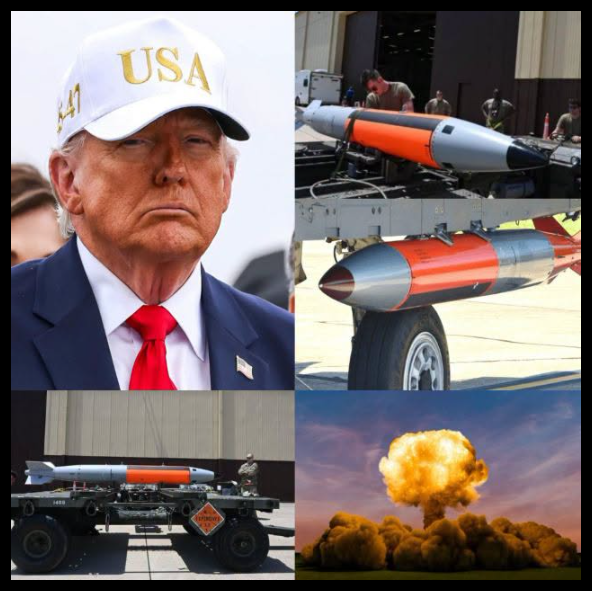
The United States has officially approved the deployment of the B61-13 nuclear gravity bomb, representing one of the most significant developments in the nation’s ongoing nuclear modernization efforts. The decision reflects a broader strategy to maintain a credible nuclear deterrent while replacing aging weapons with updated systems designed to meet modern security challenges. Although the announcement has generated widespread attention among defense experts and policymakers, it also highlights the complex balance between national security, strategic stability, and international arms control.
The B61-13 is the latest member of the long-serving B61 family of nuclear gravity bombs. First introduced during the Cold War, the B61 series has undergone numerous upgrades over several decades to improve safety, reliability, and compatibility with modern aircraft. Rather than creating an entirely new nuclear weapon, the B61-13 builds upon existing technology while incorporating modern engineering and enhanced operational capabilities.
Unlike ballistic missiles, gravity bombs are delivered directly by aircraft. After being released from a bomber, the weapon falls toward its target under controlled conditions. Depending on mission requirements, modern gravity bombs may use advanced guidance systems to improve delivery accuracy. This method provides military planners with a flexible option that differs from missile-based delivery systems.
The B61-13 is expected to be carried primarily by advanced stealth bombers, including the U.S. Air Force’s B-2 Spirit and the next-generation B-21 Raider. These aircraft are designed to penetrate sophisticated air defense systems while minimizing detection by radar. Their stealth capabilities make them an important component of the United States’ long-term strategic deterrence posture.
One of the most widely discussed aspects of the B61-13 is its reported maximum yield of approximately 360 kilotons. For comparison, this is many times more powerful than the atomic bombs used during World War II. It is important to understand, however, that the destructive effects of any nuclear weapon depend on numerous factors, including altitude of detonation, weather conditions, terrain, and target characteristics.
Supporters of the modernization program argue that maintaining a safe, secure, and reliable nuclear arsenal is essential for deterrence. They contend that aging weapons eventually require replacement or refurbishment to ensure they remain functional and safe. Modernization programs also seek to improve security features that reduce the risk of accidental detonation or unauthorized use.
Defense officials have stated that the B61-13 is intended to replace certain older nuclear weapons rather than expand the overall size of the U.S. nuclear stockpile. This distinction is an important part of the modernization strategy, which focuses on replacing aging capabilities instead of dramatically increasing the number of deployed weapons.
The approval of the B61-13 comes amid an increasingly complex international security environment. Rising geopolitical tensions, advances in military technology, and the modernization of nuclear forces by several countries have prompted many governments to reassess their defense strategies. As a result, investments in strategic deterrence have become a priority for multiple nuclear-armed states.
The B-2 Spirit remains one of the world’s most recognizable stealth bombers. Entering service in the 1990s, it was designed to penetrate heavily defended airspace while carrying either conventional or nuclear payloads. Although relatively few B-2 aircraft were produced, they continue to serve as a key element of the U.S. strategic bomber force.
The B-21 Raider represents the future of American long-range bomber aviation. Designed with advanced stealth technology, improved maintainability, and modern digital systems, the aircraft is expected to gradually replace portions of the existing bomber fleet over the coming decades. Compatibility with weapons such as the B61-13 is part of its broader mission capability.
Nuclear modernization extends beyond aircraft and bombs. The United States is also updating intercontinental ballistic missiles, ballistic missile submarines, command-and-control systems, communications networks, and supporting infrastructure. Together, these efforts are intended to ensure that the country’s nuclear deterrent remains effective throughout the coming decades.
Supporters believe modernization contributes to strategic stability by ensuring that potential adversaries understand the credibility of the U.S. deterrent. The central principle of nuclear deterrence is that maintaining a credible retaliatory capability discourages potential nuclear attacks by making the consequences unacceptable.
Critics, however, argue that continued investment in nuclear weapons may contribute to global arms competition and divert resources from other defense or domestic priorities. Some arms control advocates express concern that modernization programs undertaken by multiple countries could increase international tensions or complicate future disarmament negotiations.
The approval of advanced nuclear systems often renews debate regarding arms control agreements and non-proliferation efforts. International treaties have historically played an important role in limiting nuclear competition and promoting transparency between nuclear-armed states. Many experts continue to emphasize the importance of diplomatic dialogue alongside military preparedness.
Safety remains a major consideration in every stage of nuclear weapons management. Modern nuclear weapons incorporate multiple layers of security, including safeguards designed to prevent unauthorized use and reduce the risk of accidental detonation. Personnel responsible for these systems undergo extensive training and operate under strict procedures.
Beyond the technical aspects, the announcement also carries political significance. Decisions involving nuclear modernization often influence relationships with allies, competitors, and international organizations. Allies may view modernization as reassurance of continued security commitments, while rival nations may closely monitor developments when evaluating their own strategic planning.
The future of nuclear deterrence will likely continue to evolve as emerging technologies reshape military capabilities. Advances in cyber security, artificial intelligence, missile defense, space systems, and electronic warfare all influence strategic calculations. Policymakers increasingly face the challenge of balancing technological innovation with efforts to reduce the risk of conflict.
Ultimately, the approval of the B61-13 reflects the United States’ continuing commitment to maintaining a modern nuclear deterrent while replacing aging capabilities. Supporters view the program as necessary to preserve national security and strategic stability, while critics emphasize the importance of arms control and reducing nuclear risks. As the international security environment continues to change, discussions surrounding nuclear modernization, deterrence, and diplomacy will remain among the most consequential issues in global defense policy.